
Impact of Record-High Copper Prices on copper polyester composite tapes Manufacturers and the Cable Industry
Recently, global copper prices have continued to hit historic highs, driven by tight global supply chains, robust demand from the new energy sector, and insufficient inventory restocking. As copper serves as the core raw material for copper polyester composite tapes (CU+PET film) and the entire wire and cable manufacturing industry, the sustained surge in copper prices has triggered profound and far-reaching ripple effects across the whole industrial chain. From upstream composite tape production factories to midstream and downstream cable manufacturing, market sales and project implementation, the industry is facing dual adjustments of cost restructuring and industrial upgrading. This report systematically analyzes the specific impacts of soaring copper prices on copper-plastic composite tape manufacturers and the cable industry, as well as the industry’s coping strategies and future development trends.
Copper is an irreplaceable key raw material for the wire and cable industry, accounting for 70% to 85% of the total material cost of cable products. For copper polyester composite tapes (CU+PET film) —an essential auxiliary material for cable shielding, insulation and structural protection—copper foil and copper strips are the dominant production materials, making composite tape factories highly sensitive to copper price fluctuations. The cable industry itself features low profit margins, with the average net profit rate of the conventional cable sector hovering at only about 3%. Every RMB 1,000 increase in copper price per ton will raise the production cost of conventional cables by RMB 60 to 120 per kilometer. The current round of continuous record-breaking copper prices is not a short-term market fluctuation but a medium-to-long-term trend driven by energy transition demand and supply shortages, bringing sustained operational pressure to the industry.
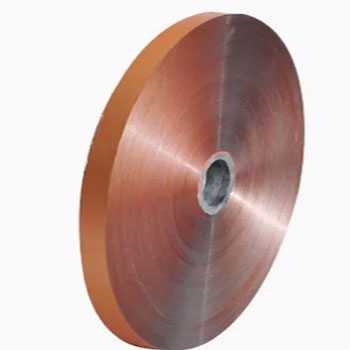
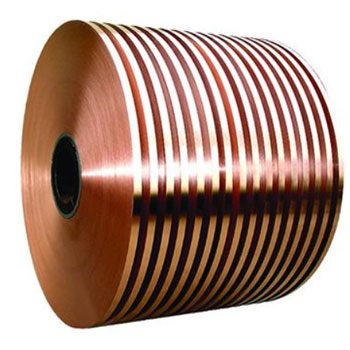
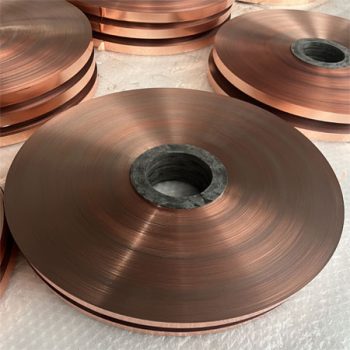
Sharply Rising Production Costs and Margin Compression
Copper-plastic composite tape production relies heavily on copper raw materials, and the skyrocketing copper prices have directly pushed up the unit production cost of composite tapes. Unlike plastic raw materials with relatively stable price fluctuations, copper price surges are rapid and unpredictable, making it difficult for small and medium-sized composite tape factories to adjust product pricing in a timely manner. Most small and medium-sized manufacturers rely on bulk orders and homogeneous products, with weak bargaining power. When cost increases cannot be fully transmitted to downstream customers in the short term, corporate profit margins are severely squeezed, and many factories even face the dilemma of “high output but low profit or no profit”.
Increased Difficulty in Inventory and Procurement Management
Fluctuating and soaring copper prices have disrupted the original raw material procurement and inventory management system of composite tape factories. On the one hand, excessive stockpiling of copper raw materials will occupy a large amount of corporate working capital, increasing capital pressure and inventory depreciation risks; on the other hand, insufficient inventory will lead to production shutdowns and delayed order delivery, failing to meet downstream cable manufacturers’ demand for stable supply. Most factories are forced to adopt small-batch and frequent procurement strategies to hedge price risks, which further increases procurement and logistics costs and reduces production operational efficiency.
Accelerated Industry Differentiation and Structural Reshuffle
The copper price surge has accelerated the survival-of-the-fittest mechanism in the copper-plastic composite tape industry. Large-scale manufacturers with stable customer resources, strong capital strength and long-term cooperative procurement agreements can effectively hedge cost risks through bulk procurement, long-term orders and refined management. In contrast, small and medium-sized factories with single product structures, weak anti-risk capabilities and low added-value products are gradually being eliminated from the market. This trend promotes the concentration of the composite tape industry towards high-quality, large-scale and high-tech enterprises, and accelerates the upgrading of product structures from low-end homogeneity to high-end customized products.
Overall Cost Inflation and Sustained Margin Pressure
As the core downstream application industry of copper and copper polyester composite tapes (CU+PET film) , the cable industry bears the most direct cost impact of rising copper prices. Power cables, communication cables and electrical equipment cables all require a large amount of copper conductors and copper-plastic composite shielding tapes. The continuous rise in copper prices has driven the overall production cost of the cable industry to rise comprehensively. Although leading cable enterprises have successively raised product prices by 3% to 19% in stages to offset cost pressures, intense market competition restricts the full transmission of cost increases. Especially in the low-end civil cable market with fierce homogenization competition, small and medium-sized cable enterprises have basically lost their pricing power, and their profit space is almost completely eroded.
Disrupted Market Order and Delayed Project Progress
The continuous adjustment of cable product prices has disturbed the stable market trading order. Many downstream engineering contractors, power construction enterprises and real estate enterprises delay order signing and project implementation to wait for price declines, resulting in a slowdown in cable market demand. In addition, for long-cycle engineering projects with fixed contract prices signed in the early stage, cable manufacturers have to bear the additional cost pressure caused by the subsequent rise in copper prices, leading to increased project losses and reduced corporate operating income. Meanwhile, the unstable supply and price of upstream copper polyester composite tapes (CU+PET film) (CU+PET film) also cause fluctuations in cable production cycles, affecting the stability of order delivery.
Boosted Technological Innovation and Material Substitution Progress
Facing the sustained cost pressure brought by high copper prices, the cable industry has accelerated technological innovation and material substitution research and development. On the one hand, enterprises actively optimize cable structural design, reduce copper consumption per unit product, and improve copper material utilization through refined production processes. On the other hand, the research, development and promotion of alternative materials such as aluminum alloy cables and composite conductive materials have been significantly accelerated. In addition, the industry has increased investment in high-end products such as high-temperature resistant, ultra-thin and lightweight special cables, reducing reliance on low-end homogeneous products and improving product added value and profit margins.
In response to the challenges brought by record-high copper prices, copper-plastic composite tape factories and cable enterprises have formed a set of effective coping mechanisms in actual operation. First, optimize the pricing mechanism, implement dynamic linkage pricing with copper prices, and adjust product prices in real time according to market copper price fluctuations to lock in profit space. Second, strengthen supply chain management, sign long-term fixed-price procurement contracts with upstream suppliers, and hedge price risks through futures and other financial tools. Third, accelerate product upgrading, focus on the research and development and production of high-value-added special composite tapes and special cables, and get rid of low-price homogeneous competition. Fourth, improve refined management, reduce production energy consumption, material loss and operating costs, and enhance corporate cost control capabilities.
In the long run, driven by the global energy transition, new energy power generation, grid upgrading and new energy vehicle development, copper market demand will remain robust, and high copper prices may become a medium-to-long-term normal state. The copper-plastic composite tape and cable industry will bid farewell to the extensive development mode of relying on low-cost raw materials and homogeneous competition. Industry competition will shift from single price competition to technology, product quality, service and comprehensive strength competition. Enterprises with core technologies, high-end product layout and perfect supply chain risk control system will gain sustainable competitive advantages. Meanwhile, material substitution, intelligent production and green low-carbon manufacturing will become the core development directions of the industry, promoting the overall high-quality upgrading of the industrial chain.